
The Epstein Files Understanding a Scandal
The Jeffrey Epstein case represents one of the most disturbing revelations of institutional failure in modern American history. Between 2024 and early 2026, the U.S. government released millions of pages of documents related to Epstein's decades long pattern of abuse. These files don't just chronicle the crimes of one man they expose how wealth, connections, and power allowed predatory behavior to continue unchecked for years. This comprehensive investigation examines the Epstein Files and what they reveal about systemic failures across multiple institutions. From the controversial 2008 plea deal that let Epstein serve just 13 months despite evidence of serious crimes, to the financial networks that continued supporting him after his conviction, to the elite institutions that chose discretion over accountability the documents paint a disturbing picture of how justice weakens as power increases. The article explores Ghislaine Maxwell's conviction as the only major figure held accountable, the pattern of abuse involving at least 36 victims, the federal prosecutors who had evidence but offered a secret deal instead, and the survivors' voices that were ignored for over a decade. Most importantly, it examines the uncomfortable truth the files force us to confront predators don't survive alone they survive because systems protect them. Until power stops shielding abuse, this won't be the last story of its kind. The files expose more than crimes Read the complete analysis.
POWER & ACCOUNTABILITY
NAEEM ABBAS
2/11/20266 min read
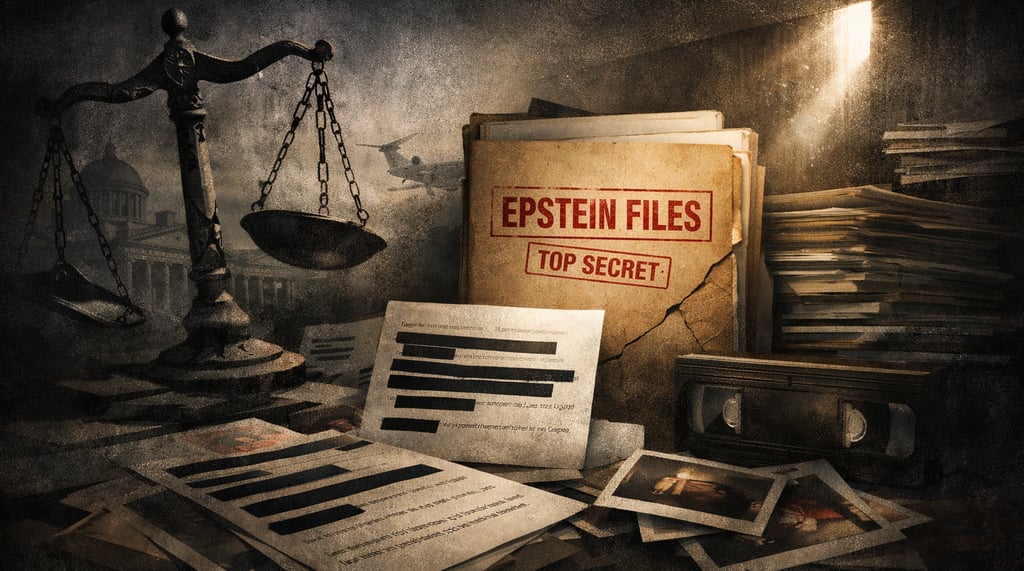
The Epstein Files Understanding a Scandal
By Naeem Abbas
Activist — Human Rights & International Accountability
The Jeffrey Epstein case represents one of the most disturbing revelations of institutional failure in modern American history. Between 2024 and early 2026, the U.S. government released millions of pages of documents, photographs, and videos related to Epstein's decades-long pattern of abuse. These files don't just chronicle the crimes of one man they expose how wealth, connections, and power allowed predatory behavior to continue unchecked for years.
Who Was Jeffrey Epstein?
Jeffrey Epstein was a financier who cultivated relationships with some of the most powerful people in the world. He owned private jets, luxury homes in Manhattan and Palm Beach, and a private island in the U.S. Virgin Islands. His social circle included politicians, academics, billionaires, royalty, and celebrities.
But behind this facade of wealth and respectability, Epstein systematically abused underage girls for decades. According to court documents and testimony, he targeted vulnerable teenagers many from unstable backgrounds with promises of money, educational opportunities, or help. What began as offers of paid "massages" quickly escalated into sexual abuse.
The Pattern of Abuse
The recently released documents confirm what survivors had been saying for years. Federal officials identified at least 36 girls, some as young as 14 years old, who were sexually abused by Epstein. Grand jury testimony revealed disturbing patterns:
Victims were recruited through other teenagers who were paid to bring friends. One survivor testified that she received $200 for each girl she brought to Epstein. Many were told to lie about their age if they were underage. The abuse occurred at multiple properties, including his Manhattan mansion, Palm Beach estate, and private island. Some victims were transported across state lines, which later formed the basis for federal sex trafficking charges.
This wasn't random criminal behavior it was organized, systematic, and enabled by a network of people who helped recruit, transport, and control victims.
Ghislaine Maxwell's Role
Ghislaine Maxwell, a British socialite and Epstein's longtime associate, played a central role in his operation. Court testimony established that Maxwell actively recruited, groomed, and controlled victims. Survivors described how she gained their trust, normalized the abuse, and in some cases directly participated in or facilitated assaults.
In December 2021, Maxwell was convicted on five federal sex trafficking-related counts. She was sentenced to 20 years in prison in June 2022 making her the only major figure from Epstein's inner circle to face serious criminal punishment. Her appeals have been rejected by multiple courts, including the U.S. Supreme Court, which declined to hear her case in October 2025.
The 2008 Plea Deal: A Decade of Lost Justice
Perhaps the most damning aspect of the Epstein story is not just the abuse itself, but how the justice system failed to stop it when it had the chance.
In 2005, Palm Beach police began investigating Epstein after a parent reported he had sexually abused her 14-year-old daughter. By 2006, the FBI had launched "Operation Leap Year." Federal prosecutors prepared a detailed 53-page, 60-count indictment. Internal documents described Epstein as a serious danger to the public and a high flight risk.
Instead of proceeding with federal charges, then-U.S. Attorney Alexander Acosta approved a secret non-prosecution agreement in 2007-2008. The terms were shocking:
Epstein pleaded guilty to two minor Florida state charges: solicitation of prostitution and procuring a person under 18 for prostitution. He served just 13 months in a county jail, with extensive work-release privileges allowing him to leave for up to 12 hours per day. The agreement granted immunity not only to Epstein but also to four named co-conspirators and any unnamed "potential co-conspirators." Victims were not informed of the deal before it was finalized, violating the Crime Victims' Rights Act.
A 2020 Justice Department review found that Acosta showed "poor judgment" but stopped short of calling it professional misconduct. Acosta later claimed he was told Epstein "belonged to intelligence" and was "above his pay grade." The plea deal effectively ended the federal investigation and sealed the indictment, allowing Epstein to walk free.
The Years That Followed
After his release in 2010, Epstein continued to move in elite circles. Despite being a registered sex offender, he maintained relationships with powerful individuals and continued receiving financial support. The files reveal that Epstein received hundreds of millions of dollars from wealthy individuals even after his criminal conviction became public knowledge.
Epstein was finally arrested again in July 2019 on federal sex trafficking charges in New York. He was found dead in his jail cell on August 10, 2019. The death was ruled a suicide by hanging, though it sparked numerous conspiracy theories that persist to this day.
The Document Releases: 2024-2026
Public pressure and congressional action eventually forced the release of Epstein-related documents on an unprecedented scale.
In January 2024, a New York judge ordered the unsealing of documents from a 2015 defamation case against Maxwell. While these contained little new information, they reignited public interest in the case. In November 2025, Congress passed the Epstein Files Transparency Act with bipartisan support. President Donald Trump signed it into law, requiring the Justice Department to release all Epstein-related files within 30 days.
The initial release on December 19, 2025, drew immediate criticism for extensive redactions. At least 550 pages were completely blacked out. Many crucial FBI interviews and internal Justice Department memos on charging decisions were unreadable. By January 30, 2026, the Justice Department had released approximately 3.5 million pages of documents, more than 2,000 videos, and 180,000 images.
What the Files Revealed
The released documents painted a disturbing picture:
Flight logs showing trips on Epstein's private jets by numerous high-profile individuals. Financial records revealing continued funding from wealthy donors after Epstein's 2008 conviction. Photographs showing Epstein with various prominent figures over the years. Grand jury testimony describing the abuse in graphic detail. FBI memos documenting investigations that were delayed, softened, or avoided. Email correspondence between Epstein and various associates, including academics, business figures, and political connections.
Importantly, the files documented how institutions that should have protected victims instead prioritized reputations and relationships. Major universities accepted donations from Epstein years after his criminal conviction. Banks failed to flag suspicious transactions in time. Oversight mechanisms moved slowly, sometimes years too late.
The Ongoing Controversy
The document releases sparked intense public debate and political tensions. Many criticized the extensive redactions, with lawmakers arguing the Justice Department failed to comply fully with the Transparency Act's requirements. The department identified over 6 million potentially responsive pages but released only about half.
Several files that were initially released, including one photograph showing President Trump, later disappeared from the Justice Department website, raising questions about transparency. Maxwell was moved from a higher-security federal prison in Florida to a minimum-security facility in Texas, prompting speculation about potential cooperation with authorities.
In early 2026, Maxwell testified before the House Oversight Committee but invoked her Fifth Amendment rights. Her attorney stated she would speak "fully and honestly" only if granted clemency by President Trump a possibility Trump has not ruled out.
The Survivors' Voices
Throughout the legal proceedings and document releases, survivors have consistently spoken about the long-term impact of the abuse:
Many described how the abuse affected their relationships, mental health, and self-worth well into adulthood. Some waited more than 15 years to be believed or taken seriously. Several were attacked or dismissed when they tried to speak out publicly. Multiple survivors expressed frustration that their names and identifying details were poorly redacted in the released documents, while powerful individuals' information was better protected.
One of the most prominent survivors, Virginia Giuffre, died by suicide in April 2025 at age 41. Her posthumous memoir, published in October 2025, detailed her allegations that she was trafficked to powerful men. Her family has continued advocating for full transparency and accountability.
Lessons and Implications
The Epstein case forces us to confront uncomfortable truths about how power operates in society. The files demonstrate several disturbing patterns:
Wealth can soften consequences. Despite evidence of serious crimes, Epstein received an extraordinarily lenient plea deal that allowed him to continue his life largely undisturbed for another decade. Connections create protection. Epstein's relationships with powerful individuals appeared to shield him from full prosecution. The 2008 plea deal remains one of the most controversial prosecutorial decisions in recent history. Institutions prioritize reputation over accountability. Universities, banks, and other organizations continued relationships with Epstein even after his conviction, choosing discretion over integrity. Victims are often treated as secondary. The failure to notify victims of the 2008 plea deal violated their legal rights and represented a fundamental betrayal of justice.
What Questions Remain?
Despite millions of pages of documents, significant questions persist:
Who funded Epstein after his 2008 conviction, and why? Were there other co-conspirators who should face charges? Why were so many crucial documents heavily redacted or withheld? How many other cases like this exist where wealth and power prevented full accountability? What institutional reforms are needed to prevent similar failures in the future?
Moving Forward
The Epstein Files serve as both a historical record and a warning. They document not just one man's crimes, but a systemic failure across multiple institutions law enforcement, the judiciary, financial oversight, and elite social networks.
For survivors and advocates, the fight continues. They push for complete transparency, protection for victims' identities, and accountability for anyone who enabled abuse. For society, the case raises fundamental questions about equality before the law and whether true accountability is possible when the accused has enough money, connections, and power.
The Epstein case proves that predators rarely operate alone. They survive because systems protect them whether through lenient plea deals, institutional silence, or the simple calculation that reputation matters more than justice.
Until those systems change, this will not be the last story of its kind.
Portfolio
Explore Naeem Abbas journey as an entrepreneur and influencer.
Connect
& Inspire
© 2026. All rights reserved.